Word Usage of ‘Swag’ vs. ‘Schwag’

Schwag?

Every once in awhile I think the meaning of slang words becomes so ingrained that we tend to forget the origin or evolution. Or in some cases I feel the meanings of two similar slang words intersect and become interchangeable to the point that no one knows which one to use. Such is the case with the usage of ‘swag’ versus ‘schwag.’

For a long time, I always thought that it was simple: swag is free stuff, like when a promoter sends you a cd or those gift bags they give Oscar nominees. Meanwhile, my former hippie high school days informs me that schwag is bad pot. Easy right?

So for some reason it drives me crazy when someone refers to free stuff as ‘schwag.’ Seemed to me like they were confusing the meanings. So I tried to get internet verification. Unfortunately the closest reputable source was Urban Dictionary, which is not quite official sounding, but often at least up to date on latest slang trends. Here’s what I found:

swag:

1. appearance, style, or the way he or she presents themselves.

To move over an area of surface with confidence, appearance, and style by taking steps with the feet at a pace slower than a run.

v. swagged, swagg-ing, swags
v. intr.

See Swagger.

He got a killa swag.

2. Promotional merchandise for a band, record label, or other entity in the music business, usually distributed at concerts.

May include t-shirts, stickers, promo CDs, posters, etc. Often free, but not necessarily; a t-shirt or record purchased at a concert might still be considered swag, especially if it is a design or release that is not readily available in the mass market.

Many independent record labels throw in a handful of free swag when they ship out mail-order packages (stickers, sampler CDs, etc).

The chief difference between swag and regular merchandise is that its purpose is not to make a profit, but to promote the band/label, and reward its supporters by giving them something cool and unique.

I picked up some great swag at the concert last night.

schwag:

1. Term used to describe low grade marijuana.
This type of marijuana is usually brown, seedy, dry. The term is also used by many pot heads to describe anything that is low grade.

I hate smoking schwag, but i cant get any dank right now so i guess i’ll have to.

2. Any free or extra goods, usually given to employees or workers.

Then on the etymology blog Take Our Word I found this which discusses the potential connections between the two words:

…it did suggest a Yiddish influence on the variant pronunciations of swag AND on the derivation of schwag “low-grade [weak] marijuana”. We did not get to continue our research into the Yiddish word at the time, but we did happen to find it tonight: shvakh “weak”. The existence of that word does make plausible the connection between Yiddish and shwag/schwag. It certainly doesn’t prove the connection, but it definitely suggests that further research in this area is required.

They also reference an older article which says:

In the 17th century we find swag recorded as slang for a shop that sold cheap trinkets. Then by the late 18th century we find it with the meaning “a thief’s plunder or booty” – those same cheap trinkets? Today’s equivalent would be the plush toy animal prizes that line carnival game stalls. So it appears that the cheap promotional items one gets at movie publicity parties and auto shows were equated with the cheap stuff given as prizes at carnival game booths or the trinkets sold at cheap stores, and so named.

As you can see, while not totally conclusive, for the most part I was right… and yet the second definition of schwag implies I am ALSO wrong. This does not however even get to the fact that ‘schwag’ can be ‘swag’ if you get it in the mail from a promoter. I imagine that the pot reviewers at the classy magazine High Times, get schwag as swag all the time…much like music reviewers get free cds.

So when it comes to referring to promotional items, which is it? Can anyone else settle this debate? (Obviously I’m bored out of my mind.)
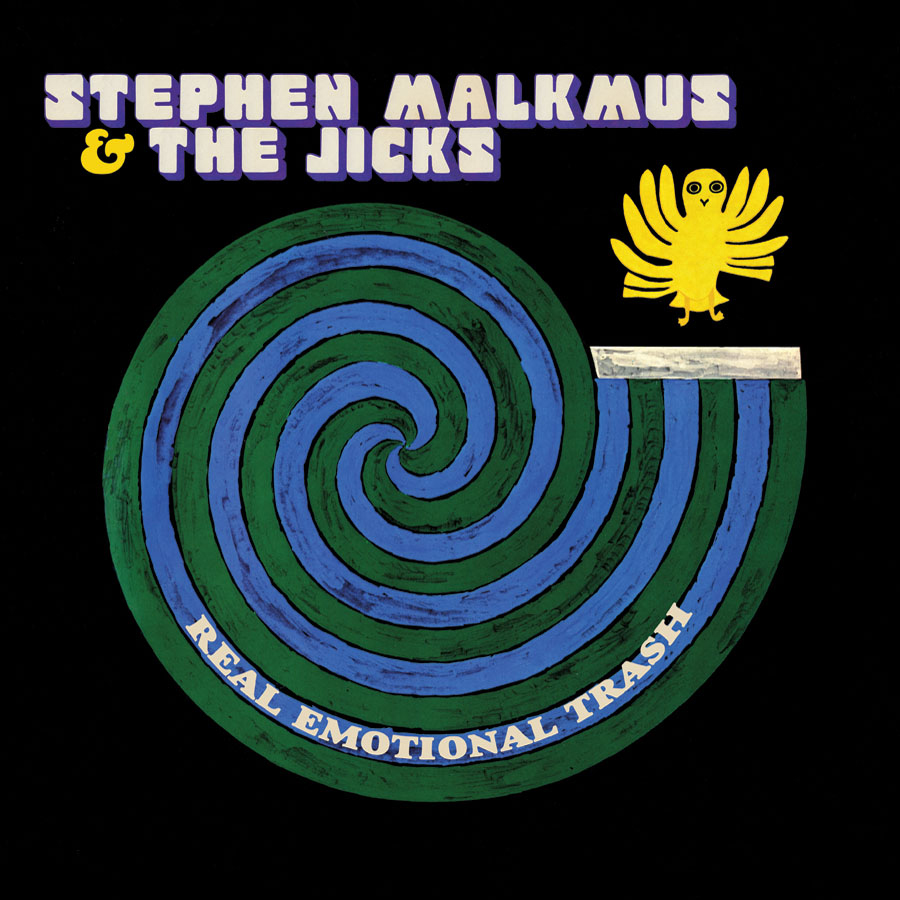
NPR Song Of The Day: Stephen Malkmus & The Jicks, ‘Cold Son’

Stephen Malkmus and the Jicks' Real Emotional Trash is out now.
Stephen Malkmus and the Jicks’ Real Emotional Trash is out now.

Wrote about Stephen Malkmus and the Jicks’ song “Cold Son” from the new album, Real Emotional Trash for NPR’s Song of the Day. To read the full review and hear the song clicken Sie hier.

Continue reading NPR Song Of The Day: Stephen Malkmus & The Jicks, ‘Cold Son’

Sigur Ros’ Debuts Film on Web

In the summer of 2006, the ethereal Icelandic music group Sigur Ros came back home after a long tour around the world to play a series of free unannounced concerts. Heima, documents those shows… check out the film now streaming on YouTube (and linked below) in its entirety. Pretty amazing and inspirational for anyone who appreciates watching a the creation of fantastic and otherworldly music. Sigur Ros is quite simply breathtaking.

[youtube]lr4s7KeCbV8[/youtube]

Best Song I’ve Heard All Day: Jicks Edition

Stephen Malkmus & the Jicks

(part 124 in a 1001 part series)

Ah yes.. Good ‘ol Stephen Malkmus has a new record out: Real Emotional Trash. It’s a much ‘jammier’ rock record than previous solo albums. While Pavement is long gone, Malkmus has put out some great things since then. This song “Out of Reaches” might be one of the more concise on the album, but it’s pretty strong and easily one of my favorites.

You can also hear another song off the album that I reviewed this year here.

“Out Of Reaches” by Stephen Malkmus & the Jicks
[audio:https://hellocomein.com/soundbox/HelloShuffle/bestsongallday/StephenMalkmus_OutOfReaches.mp3]

Teo Macero’s Lasting Impact

With little fanfare, the legendary jazz producer Teo Macero pass away this week. Jazz producers typically do not get recognized for their work and compared to the giants he worked with, Macero was sort of an afterthought when it came to famous jazz records. At least for casual jazz listeners who didn’t pay that much attention.

Perhaps most well known for his work on the late Miles Davis albums like In a Silent Way and Bitches Brew, Macero was sort of jazz’s George Martin, bringing an artistic element into jazz production. This might seem common place now, but in many ways the early days of recording jazz was intended to mirror the live gig performance: the band recording live in the studio in single takes and usually countless songs in a day’s work.

Macero changed much of that by incorporating emerging technologies in multitracking, overdubs, splices and so on, most commonly found in pop records and experimental classical and electronic composers of the 50s and 60s. Despite all the studio trickery though, he still maintained the spirit of jazz to allow the musicians to feel free and spontaneous to create and improvise.

Prior to producers taking this approach, recording sessions weren’t much more than just a chance to package a bunch of new songs together while they were still fresh and hope to move some units in sales. Macero helped to make the concept of an album as a complete and purposeful package.

His legacy is still alive in projects today such as Floratone, in which producers Tucker Martine and Lee Townsend reworked improvisations by Bill Frisell and Matt Chamberlain into a completely different entity.

Check out this clip below of Macero discussing his work with Miles:

[youtube]ZnStkHmHQoE[/youtube]

Also be sure to check out this great post on the AllMusic blog that showcase’s Macero’s fantastic discography and the year of 1959 when he helped produce some of the best albums of all time: Miles\Gil Evans’ Sketches of Spain, Charles Mingus’ Mingus Ah Um, Dave Brubeck’s Time Out and a few more. Wow.

Director Vincent Moon and REM Collaborate

The popularity of the upstart music video series “The Take Away Shows” (hosted by la Blogotheque) has been surprisingly influential in the world of web video.

With artists such as Arcade Fire, St. Vincent, Andrew Bird, The National and so many more, series creator and filmmaker Vincent Moon stages lo-fi, yet fantastically shot portraits of bands singing and playing on the streets, on roofs and in quiet cozy spaces.

The series’ signature hand-held documentary style has allowed an openness and spontaneity not typically found in traditional performance videos. The camera wanders around the room, often taking tangential peaks at the setting and landscape the music inhabits. At times the intimacy of the moment all feels a bit voyeuristic, as if we are witnessing something we shouldn’t be seeing.

This bare bones and simple approach to capturing quiet and improvised musical performances has spawned quite a few imitators and as well as the likes of R.E.M.’s Michael Stipe. According to an article on CNN, Stipe, who’s a fan of the site, asked Moon to collaborate on a few projects for their upcoming new record Accelerate including a concert film “6 Days.”

You can find an amazing collage\mosaic film work on the album’s promotional site (SupernaturalSuperserious.com) and another 90 Nights. Check out one of the video segments for 90 Nights below and the full “Supernatural Superserious” video on YouTube.

For the hell of it, I thought I’d post the National’s video of “Start A War,” probably one of my favourite sessions.

Best Song I’ve Heard All Day: Bedroom Musician Edition

Throw Me The Statue

(part 91 in a 1001 part series)

Today’s nomination for ‘best song i’ve heard all day’ goes to the one-man bedroom musician, Scott Reitherman — who records under the name of Throw Me the Statue.

A mix of electronic pop and garage rock, this song “Lolita” from the new album Moonbeams, has been on repeat all day on the ol’ headphones. Probably not the best song I’ll hear this week, but a new one I happen to like today.

“Lolita” by Throw Me The Statue
[audio:https://hellocomein.com/soundbox/HelloShuffle/bestsongallday/TMTS_Lolita.mp3]

Old Things That Are New To Me — Dieter

SprocketsSomehow today I was reminded of one of the weirdest characters on SNL — Dieter. You might remember those “Sprockets” sketches Mike Myers did where he played the late 70s, early 80s Kraftwerk-inspired, monkey touching, post-industrial German tv host.

There was something about that character that was always hilarious to me, even when I had no idea what it was spoofing. Thinking back, it’s odd how popular that character was for a time, mostly because that early Euro-electronic movement was always relatively unknown to the mainstream… especially in the States during the early ’90s when the sketches aired on SNL.

Anyway, I came across this video on the ol’ YouTubes, one I hadn’t seen, which looks to be the first appearance of Dieter, before the Sprockets sketches. It might be my new favourite because of all the strange references to art college in Stuttgart, S&M\monkey touching culture and the duo’s ambiguous relationship. The whole thing seems really ahead of its time.

Take a look here. (Apparently you cannot embed this video b\c NBC or whomever think that embedding videos is stealing. In this case it is more like unearthing a long forgotten classic for people…it’s free advertising people!)

Time for Ch..ch..ch..Changes

As the campaign trails roll on, its easy for any candidate to basically revert a series of buzzwords to define their political stances on issues. Here is one montage proving such a point:

[youtube]gEaS-K3j3M8[/youtube]

Brilliant.

Reminds me of this one I just saw on Colbert Report.